Painting & renovation
Calculate paint from surface, coats and coverage
Paint coverage is product- and surface-dependent. Rough or absorbent walls can use more than a smooth previously painted surface.
Understand the requirement
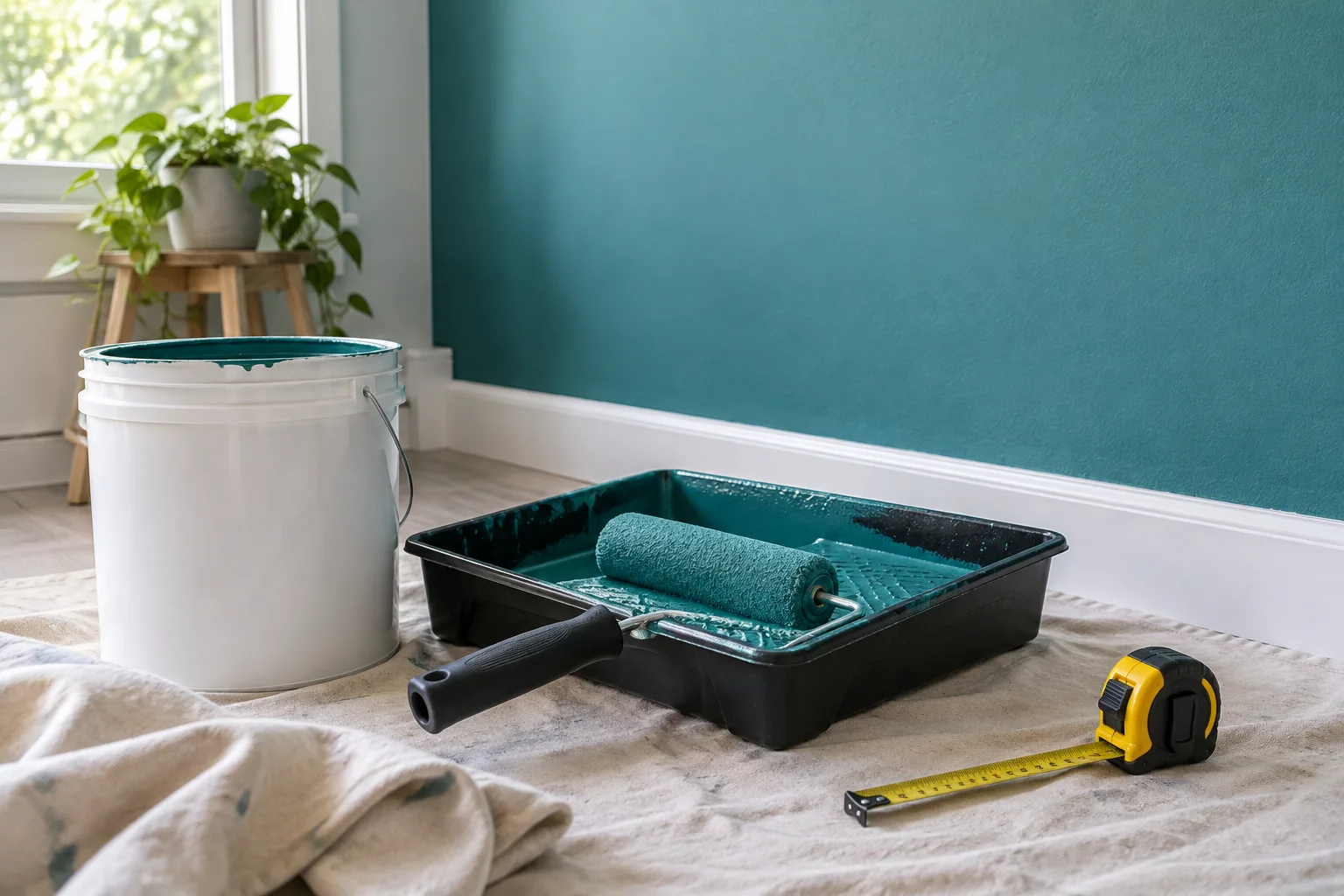
Paint coverage is product- and surface-dependent. Rough or absorbent walls can use more than a smooth previously painted surface. Record walls and ceiling separately, decide the required number of coats and read the declared coverage for the selected paint. Primer is a separate product, not a substitute for an uncounted finish coat.
Choose the right calculation
Multiply net paintable area by coat count, then divide by square metres per litre per coat. Deduct measured openings, but include reveals if they will be painted. Compare coverage assumptions before rounding to available container sizes. Dark-to-light colour changes and repairs may change the coating system; confirm rather than automatically adding a guessed third coat.
Check the product and the order
Check the surface condition before turning litres into an order. Cleaning, repairs and primer may need different products and drying intervals. Keep wall and ceiling colours on separate lines, and include tools and protection materials. A coverage estimate describes quantity, not whether a coating is compatible with every existing substrate.
Worked example
A transparent planning example
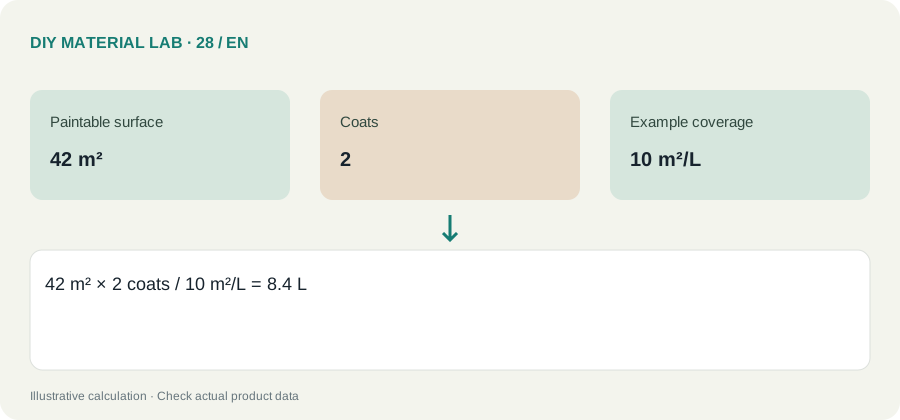
Use these inputs to follow the calculation. The result below explains what can and cannot be concluded from it.
| Paintable surface | 42 m² |
|---|---|
| Coats | 2 |
| Example coverage | 10 m²/L |
At 8 m²/L the same job needs 10.5 L; at 12 m²/L it needs 7 L. These are coverage scenarios, not claims about a particular brand. Round the chosen case to compatible container sizes and keep the colour batch consistent.
Compare the scenarios
The following comparison isolates the quantities or assumptions discussed in the example. It is a planning illustration, not measured performance data.
Values are calculated from the illustrative inputs above. Different products or dimensions change the result.
Planning checklist
- Measure the actual project and record the units next to every dimension. Identify the regions or parts counted so nothing is included twice.
- Confirm the exact material format and its product instructions. Replace the example inputs with declared dimensions, coverage or yield from your chosen product.
- Calculate the net requirement first. Show cutting or application allowance separately and check whether the example method fits your geometry.
- Convert to whole supplier units once, then price the complete order including compatible accessories, delivery and any separately specified repair stock.
Mistakes to avoid
Do not mix millimetres and metres in the same multiplication. Do not apply a reserve twice, and do not treat a rounded purchase unit as proof that every part fits. Recheck the specific limitation described in the worked example before paying for the order.
Questions and answers
Can I copy the example quantities directly?
No. The examples demonstrate the calculation, not your exact room, layout or product. Replace the inputs and check the specific limitation explained with the result.
What should I verify before ordering?
At 8 m²/L the same job needs 10.5 L; at 12 m²/L it needs 7 L. These are coverage scenarios, not claims about a particular brand. Round the chosen case to compatible container sizes and keep the colour batch consistent.