Flooring
Flooring packs: round once, order correctly
Pack coverage is the purchase unit, while floor area is the design requirement. Manufacturers may sell the same collection in different pack sizes, so use the label of the exact format.
Understand the requirement
Pack coverage is the purchase unit, while floor area is the design requirement. Manufacturers may sell the same collection in different pack sizes, so use the label of the exact format. Keep an audit trail from measured area to reserve to whole packs; it makes a later shortfall or surplus much easier to understand.
Choose the right calculation
Apply the allowance before dividing by pack coverage. Round up the final count, then calculate purchased area and surplus. If you want an unopened maintenance pack, add it as a visible extra line. Check batch consistency and the supplier return terms instead of assuming all spare packs can be returned.
Check the product and the order
A material estimate does not check whether the substrate is dry, flat and suitable. Consult the exact floor-system instructions before buying underlay, adhesive or transition profiles. Record the final build-up height at doors. Keep unopened repair stock identifiable by product and batch; a large offcut pile is not a dependable replacement for matching intact boards.
Worked example
A transparent planning example
Use these inputs to follow the calculation. The result below explains what can and cannot be concluded from it.
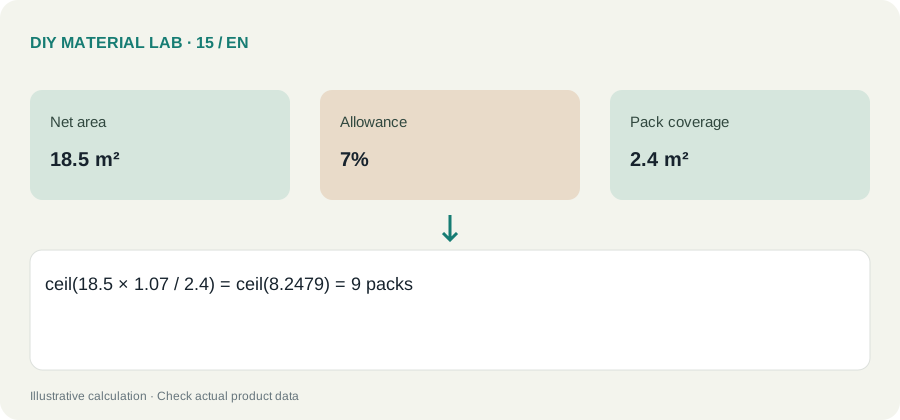
| Net area | 18.5 m² |
|---|---|
| Allowance | 7% |
| Pack coverage | 2.4 m² |
Nine packs cover 21.6 m². The net surplus is 3.1 m², larger than the 1.295 m² planned allowance because packs cannot be split. A separate maintenance pack would increase the order to ten, not quietly alter the reserve percentage.
Compare the scenarios
The following comparison isolates the quantities or assumptions discussed in the example. It is a planning illustration, not measured performance data.
Values are calculated from the illustrative inputs above. Different products or dimensions change the result.
Planning checklist
- Measure the actual project and record the units next to every dimension. Identify the regions or parts counted so nothing is included twice.
- Confirm the exact material format and its product instructions. Replace the example inputs with declared dimensions, coverage or yield from your chosen product.
- Calculate the net requirement first. Show cutting or application allowance separately and check whether the example method fits your geometry.
- Convert to whole supplier units once, then price the complete order including compatible accessories, delivery and any separately specified repair stock.
Mistakes to avoid
Do not mix millimetres and metres in the same multiplication. Do not apply a reserve twice, and do not treat a rounded purchase unit as proof that every part fits. Recheck the specific limitation described in the worked example before paying for the order.
Questions and answers
Can I copy the example quantities directly?
No. The examples demonstrate the calculation, not your exact room, layout or product. Replace the inputs and check the specific limitation explained with the result.
What should I verify before ordering?
Nine packs cover 21.6 m². The net surplus is 3.1 m², larger than the 1.295 m² planned allowance because packs cannot be split. A separate maintenance pack would increase the order to ten, not quietly alter the reserve percentage.