Tiles & layout
Plan tile waste without guessing a universal percentage
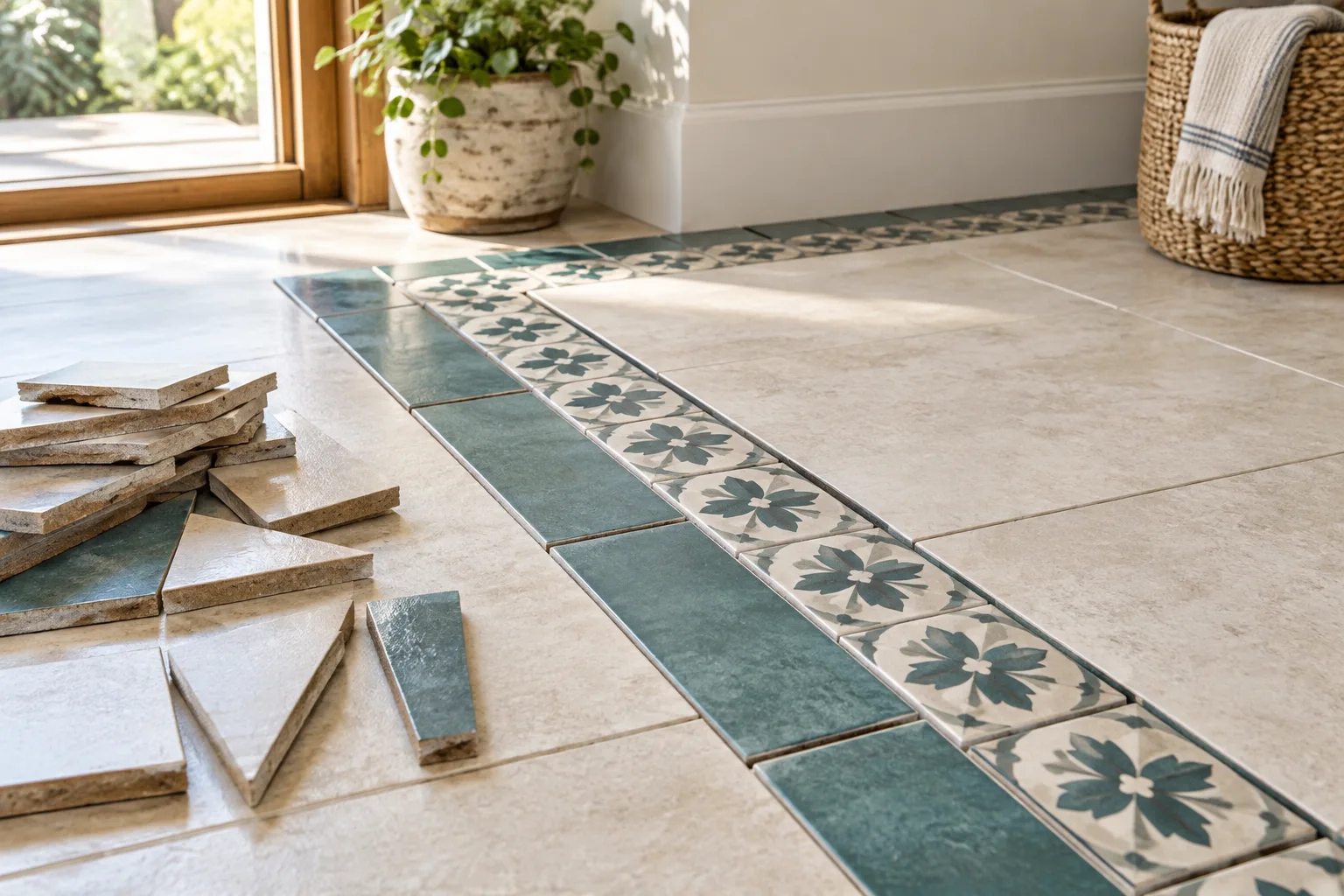
For tiles, the most expensive loss can be a cut that leaves an unusable remainder. Small border pieces, diagonals, recesses and fragile material increase planning uncertainty.
Understand the requirement
For tiles, the most expensive loss can be a cut that leaves an unusable remainder. Small border pieces, diagonals, recesses and fragile material increase planning uncertainty. Reserve tiles for future repairs explicitly: matching the original colour batch later may be difficult, but that reserve is not the same as installation waste.
Choose the right calculation
Count full pieces and border pieces separately on a scaled sketch. A cut tile can supply two border pieces only if both dimensions, finished edges and pattern orientation work. Add expected breakage as a visible assumption, then round to boxes. Do not subtract all openings if the surrounding cuts still require complete tiles.
Check the product and the order
Check the exact tile size and the installation system before counting boxes. Nominal format, usable face size and joint module are different concepts. Adhesive selection, substrate preparation and movement joints need their own product instructions. Store a few matching intact tiles deliberately if future repair access matters, rather than relying on irregular border fragments.
Worked example
A transparent planning example
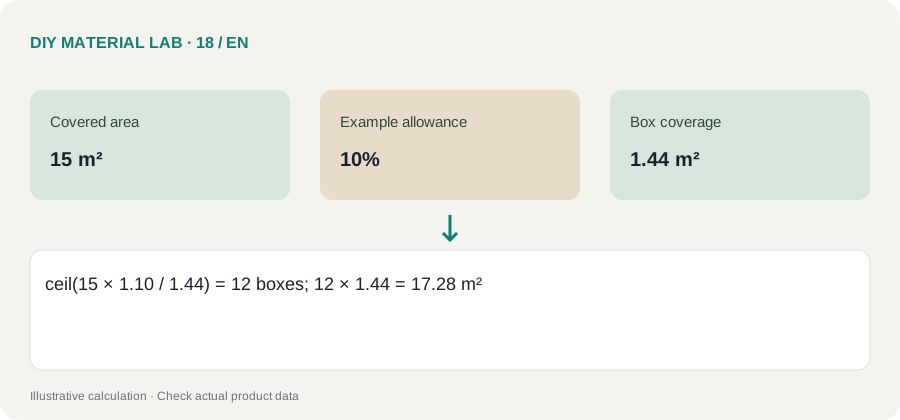
Use these inputs to follow the calculation. The result below explains what can and cannot be concluded from it.
| Covered area | 15 m² |
|---|---|
| Example allowance | 10% |
| Box coverage | 1.44 m² |
Twelve boxes provide 17.28 m². The surplus over the 15 m² floor is 2.28 m², but some will become cuts. If you need a sealed spare box, increase the order deliberately to thirteen.
Compare the scenarios
The following comparison isolates the quantities or assumptions discussed in the example. It is a planning illustration, not measured performance data.
Values are calculated from the illustrative inputs above. Different products or dimensions change the result.
Planning checklist
- Measure the actual project and record the units next to every dimension. Identify the regions or parts counted so nothing is included twice.
- Confirm the exact material format and its product instructions. Replace the example inputs with declared dimensions, coverage or yield from your chosen product.
- Calculate the net requirement first. Show cutting or application allowance separately and check whether the example method fits your geometry.
- Convert to whole supplier units once, then price the complete order including compatible accessories, delivery and any separately specified repair stock.
Mistakes to avoid
Do not mix millimetres and metres in the same multiplication. Do not apply a reserve twice, and do not treat a rounded purchase unit as proof that every part fits. Recheck the specific limitation described in the worked example before paying for the order.
Questions and answers
Can I copy the example quantities directly?
No. The examples demonstrate the calculation, not your exact room, layout or product. Replace the inputs and check the specific limitation explained with the result.
What should I verify before ordering?
Twelve boxes provide 17.28 m². The surplus over the 15 m² floor is 2.28 m², but some will become cuts. If you need a sealed spare box, increase the order deliberately to thirteen.